Ready to Play?
Click the button below to start playing Ping Pong Air. The game will load in this area.
Ping Pong Air
Ping Pong Air is a fast-paced arcade game where you bounce a lightweight ball through shifting obstacles and score points with precise timing. Simple to start, challenging to master.
Ping Pong Air
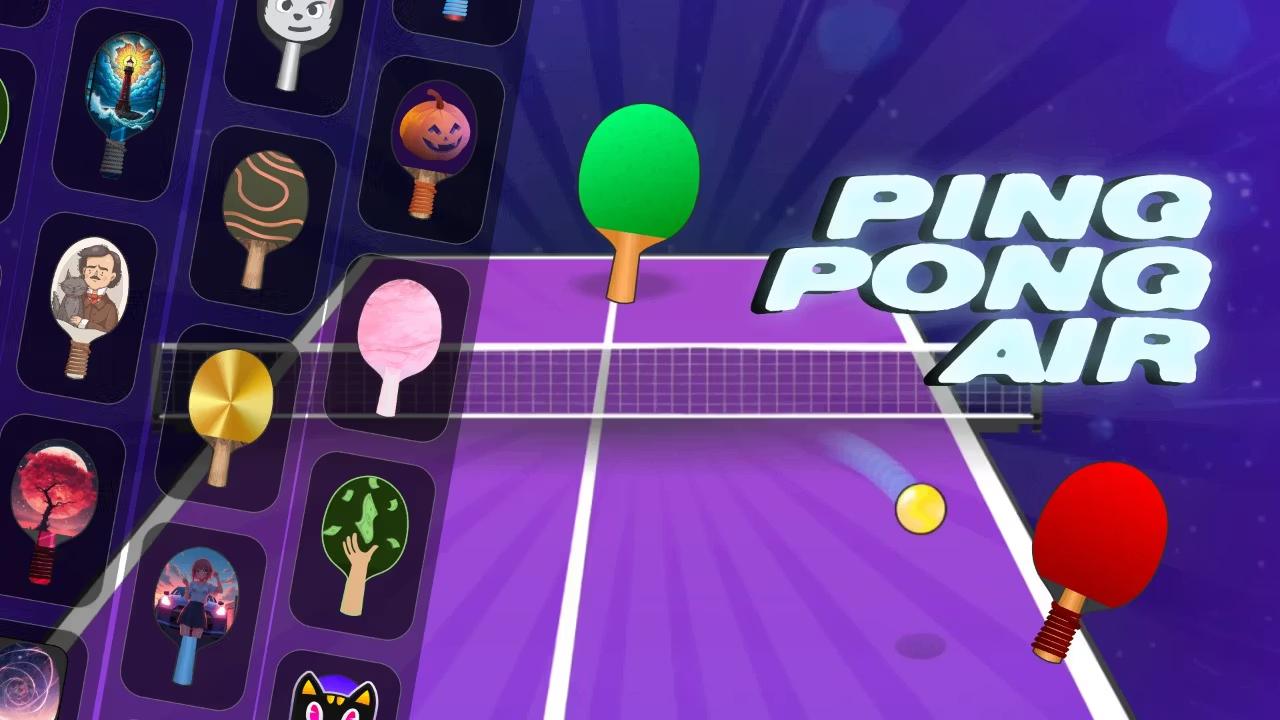
Ping Pong Air is one of those online website games that seems simple at first glance, just hit the ball back and forth, but pulls us in for "one more round" over and over. It's fast, lightweight, and runs right in our browser, which makes it perfect for quick breaks, casual competition with friends, or even sharpening our reflexes.
In this guide, we'll walk through what Ping Pong Air actually is, how to start playing online, and the features that make it so addictive. We'll also cover practical tips, strategies, and tech requirements so we can get the smoothest, most fun experience possible.
What Is Ping Pong Air?
Ping Pong Air is an online browser-based game that reimagines table tennis with a light, slightly arcade-style twist. Instead of needing a physical paddle and table, we play using our keyboard, mouse, or touchscreen, controlling a virtual paddle to keep a ball in play.
Unlike many bulky sports simulators, Ping Pong Air is designed to load quickly, run on almost any modern device, and deliver quick, satisfying matches. The "Air" in the title hints at how the ball moves, it often feels lighter and more dynamic than in a realistic table tennis sim, which gives the game its own unique rhythm.
Core Concept And Game Mechanics
At its core, Ping Pong Air is about timing, positioning, and anticipation.
Most versions of the game follow these common mechanics:
- Paddle control: We move a paddle horizontally (and sometimes vertically) along one side of the table or playfield.
- Ball physics: The ball bounces off our paddle, the table, and the edges: its trajectory changes based on where and how fast we hit it.
- Scoring: We gain points when our opponent fails to return the ball, and they gain points when we miss.
- Rounds/sets: Matches are typically played to a certain score, often 5, 7, 11, or 21, depending on the mode or settings.
In Ping Pong Air, contact point matters a lot. Hitting the ball with the paddle's edge might send it off at a sharp angle, while a center hit produces a more straight, controlled shot. Speed and timing also influence how aggressive or safe our shot becomes.
We'll usually see some or all of the following in the game's moment-to-moment play:
- Serve: One side serves first: the ball launches with a set or variable speed.
- Rallies: Both sides attempt to keep the ball in play, using angles and speed to outmaneuver each other.
- Power or spin effects (in some versions): Hitting while moving quickly or at specific angles can produce a pseudo-spin effect, changing how the ball bounces.
How Ping Pong Air Differs From Classic Table Tennis Games
Ping Pong Air isn't trying to be a strict simulation of real-world table tennis. Instead, it balances easy-to-learn controls with just enough nuance to keep us improving.
Here's how it typically differs from classic table tennis games:
- Lighter, snappier physics: The ball often travels faster and bounces a bit more dramatically, which makes the game feel energetic and arcade-like.
- Shorter match length: Many online website game setups for Ping Pong Air are tuned for quick sessions, perfect for a break between tasks.
- Simplified controls: We usually don't manage detailed spin controls like in hardcore sims: instead, angles and timing provide depth without over-complicating things.
- Accessible difficulty: AI opponents are often scalable, from ultra-casual to sharp and punishing, letting us ramp up as our skills grow.
The end result: Ping Pong Air hits a sweet spot between casual fun and competitive challenge, especially when we jump into multiplayer.
How To Start Playing Ping Pong Air Online
One of the main reasons Ping Pong Air is popular is how easy it is to hop in. No downloads, no big installs, just a modern browser, a stable connection, and a bit of free time.
Accessing The Game On Your Browser Or Device
In most cases, we can access Ping Pong Air in three common ways:
- Desktop browser: Open a modern browser like Chrome, Edge, Firefox, or Safari and navigate to the Ping Pong Air game page or portal that hosts it.
- Mobile browser: On phones or tablets, we can use Chrome, Safari, or another up‑to‑date browser. Many versions of the game auto-adjust to small screens.
- Embedded on gaming sites: Some online gaming hubs embed Ping Pong Air directly: we just click the thumbnail and it launches inside the page.
To get the best experience, we should:
- Keep our browser updated to the latest version.
- Close heavy background tabs to free up CPU and RAM.
- Use a reasonably fast and stable internet connection (more on that later).
Understanding The Game Modes And Menus
Once we load Ping Pong Air, we'll typically see a main menu with options like:
- Play / Start Game: Quick start into a default mode (often vs. AI).
- Single-Player: Choose AI difficulty, practice, or challenge modes.
- Multiplayer: Local or online matches versus friends or random players.
- Settings / Options: Adjust sound, graphics, difficulty, or controls.
- Help / Tutorial: Basic explanations of rules and controls.
Common game modes might include:
- Classic match: First to a set score with standard rules.
- Time attack: Score as many points as we can before the timer runs out.
- Endless rally / practice: Keep the ball in play as long as possible with no formal scoring.
It's worth spending a minute in the menus before jumping into ranked or competitive modes. Customizing difficulty and controls up front saves us frustration later.
Basic Controls And Interface Overview
Controls will vary slightly depending on the version of Ping Pong Air and the device we're using, but they usually follow patterns like these:
On desktop:
- Mouse: Move the paddle by moving the mouse: click or hold to add power (if supported).
- Keyboard: Use arrow keys or A/D (left/right) to move the paddle.
- Touchpad: Similar to mouse: drag to position the paddle.
On mobile/touchscreen:
- Touch drag: Slide our finger along the bottom or side of the screen to move the paddle.
- Tap zones: Some versions use left/right screen halves for paddle movement.
The on-screen interface usually shows:
- Scoreboard: Our score vs. opponent's, and sometimes set/game count.
- Serve indicator: Who's serving next.
- Pause or menu button: To quit, restart, or adjust settings mid-game.
- Connection or ping indicator (for online multiplayer): Helps us diagnose lag.
It's a good idea to play a few low-stakes practice rounds just to let our muscle memory adapt to the specific control feel of this online website game.
Key Features That Make Ping Pong Air Addictive
Ping Pong Air looks simple on the surface, but several design choices keep us coming back. The blend of responsive physics, difficulty options, and customization turns a straightforward concept into something surprisingly sticky.
Physics, Speed, And Difficulty Settings
The ball physics in Ping Pong Air are tuned to feel responsive rather than strictly realistic.
Key elements that hook us:
- Acceleration and bounce: The ball often speeds up slightly during long rallies, turning relaxed exchanges into intense, high-stakes volleys.
- Angle sensitivity: Small changes in paddle position can radically change the ball's path, letting experienced players "paint the lines" and punish slow reactions.
- Difficulty sliders: Many builds include AI difficulty levels or speed settings. On lower settings, the ball moves slower and the AI makes forgiving mistakes. On higher settings, shots come in fast and precise.
This scaling is what makes Ping Pong Air both beginner-friendly and a genuine challenge when we decide to push ourselves.
Single-Player, Multiplayer, And Practice Modes
Variety in game modes prevents burnout:
- Single-player vs. AI: Great for learning the basics, testing new strategies, or warming up.
- Multiplayer (local or online): Where the real drama happens. Playing against human opponents adds unpredictability and rivalry.
- Practice / training: Some versions offer targeted drills, like returning serve-only shots, surviving endless rallies, or playing with handicap rules.
When we mix these modes, practicing on AI, then jumping into multiplayer, we'll notice our skill ramp up faster. The feedback loop is quick: we try something, see what works, and adapt.
Customization Options And Visual Styles
Another reason Ping Pong Air holds attention is personalization. Depending on the host site or version, we may see:
- Theme options: Classic table, neon cyber courts, retro pixel art, or minimalist flat designs.
- Paddle and ball skins: Different colors, trails, glow effects, or patterns.
- Sound and music tweaks: Volume sliders or alternate sound packs to make each hit more satisfying.
These cosmetic tweaks don't change core gameplay, but they do help the game feel like ours. When we dial in a visual style we like and pair it with our preferred difficulty, Ping Pong Air starts to feel less like a random browser distraction and more like a go-to skill game.
Tips And Strategies To Improve Your Ping Pong Air Skills
Once we've played a few matches, we quickly realize: there's more to winning than simply "hit the ball back." To climb in multiplayer or beat tougher AI levels, we need to understand timing, angles, and smart positioning.
Mastering Timing, Angles, And Shot Control
Ping Pong Air rewards precision over panic.
A few practical habits help a lot:
- Stay centered by default: Keep our paddle near the middle of our side when we're not actively striking. This shortens our travel distance to either edge.
- Hit early for sharp angles: Contacting the ball slightly ahead of its centerline often sends it at a steeper angle, forcing the opponent to scramble.
- Hit late for safer returns: Letting the ball travel closer to our body or paddle centerline tends to produce straighter, easier-to-control shots.
- Calibrate power: If there's a power mechanic, we should avoid max power on every hit. Mixing soft and hard shots breaks the opponent's rhythm.
We'll notice that the best rallies happen when we're not just reacting, but planning two or three shots ahead, setting up angles that open space on our opponent's side.
Offensive vs. Defensive Playstyles
Different playstyles thrive in Ping Pong Air, and part of improving is figuring out which one suits us.
Offensive style:
- Focuses on aggressive angles and fast shots.
- Tries to end points quickly by catching opponents out of position.
- Uses sharp side-to-side movement to open gaps.
This works best when we have solid control and quick reaction times. The risk is that one mis-timed swing can send the ball out or into our own net.
Defensive style:
- Prioritizes consistency over power.
- Returns the ball safely and waits for the opponent to overreach.
- Uses high-percentage shots with fewer wild angles.
Defensive players often win because opponents simply make more errors over time. If we're still learning, leaning defensive while gradually adding offensive plays tends to be the safest path.
The sweet spot is usually a hybrid: we defend by default, then switch into attack mode when we spot a weak return (for example, a slow ball floating near the center).
Common Beginner Mistakes To Avoid
We all make similar mistakes when we first jump into Ping Pong Air. Being aware of them helps us skip a lot of frustration:
- Over-chasing the ball: New players dart wildly toward the ball instead of moving calmly and staying roughly centered.
- Swinging too early: Hitting at the extreme edge of the paddle without control creates wild angles and out-of-bounds shots.
- Ignoring practice modes: We often rush into multiplayer and get discouraged. A few practice rounds first make a huge difference.
- Cranking difficulty too fast: Jumping from easy AI to the hardest level can make Ping Pong Air feel "unfair," when the real issue is simply pacing our learning.
If we consciously slow down, practice consistency, and increment difficulty in steps, our win rate climbs much faster than we'd expect.
Playing Ping Pong Air With Friends
Ping Pong Air shines when we bring friends into the mix. Friendly rivalry, quick rematches, and running scoreboards turn a simple online website game into a shared ritual.
Setting Up Multiplayer Matches
Depending on the specific implementation of Ping Pong Air, multiplayer can work in a few ways:
- Local multiplayer on one device: We share a keyboard, use different halves of a touchscreen, or pass the device back and forth between points.
- Online private rooms: We create a private lobby or room code, then share it with friends so only invited players can join.
- Matchmaking or public lobbies: We join a queue and let the game pair us with other players online.
For smooth multiplayer sessions, it's smart to:
- Make sure everyone's connection is stable before starting.
- Agree on match length and difficulty so nobody feels locked into an endless game.
- Use voice chat or messaging (if available) to coordinate rematches.
Friendly Tournaments And Score Challenges
Once we have a group of friends who enjoy Ping Pong Air, it's easy to organize mini-events:
- Round-robin tournaments: Everyone plays everyone: the best overall record wins.
- King of the table: Winner stays on, challenger rotates in: track streaks.
- Score challenges: Who can achieve the highest score in a time attack or survive the longest rally in practice mode.
We can track scores in a shared spreadsheet, group chat, or even a simple notepad. The point isn't perfect fairness, it's having a light, ongoing competition that keeps us coming back.
Cross-Device And Remote Play Considerations
When friends are on different devices, PC, laptop, tablet, phone, Ping Pong Air's browser-based nature really helps.
To keep things fair and smooth:
- Encourage modern browsers: Everyone should use an updated browser on their device of choice.
- Watch for input advantages: Mouse users may have finer control than touch-only players: we can balance this by adjusting difficulty or agreeing on house rules.
- Mind time zones and latency: If we're playing across regions, a small delay is normal. Choosing servers closer to the host (when possible) reduces lag.
With a bit of coordination, Ping Pong Air becomes a reliable go-to game night choice, even when we're not in the same room, or the same country.
Technical Requirements, Performance, And Safety
Because Ping Pong Air is an online website game that runs in the browser, we don't need a gaming PC to enjoy it. Still, a few technical considerations can make a noticeable difference.
Recommended Devices, Browsers, And Internet Speeds
Devices:
- Modern desktops and laptops (Windows, macOS, ChromeOS) handle the game easily.
- Most mid-range phones and tablets from the last few years run it smoothly.
Browsers:
- Chrome, Edge, Firefox, and Safari are usually the safest bets.
- We should keep auto-updates enabled so we always have current performance and security patches.
Internet speeds:
- For single-player modes, even modest connections work, since most logic runs locally.
- For online multiplayer, a low-latency connection matters more than raw speed. A stable 5–10 Mbps connection with low ping is usually enough.
If we're on Wi‑Fi, staying relatively close to the router or using 5 GHz (if available) often improves responsiveness.
Troubleshooting Lag And Control Issues
If Ping Pong Air feels sluggish or choppy, we can systematically troubleshoot:
- Close extra tabs and apps: Background video streams, downloads, or heavy pages can steal CPU and bandwidth.
- Lower graphics or effects: If the game offers visual quality options, dial them down to reduce load.
- Switch browsers: Occasionally, a different browser handles the game better on our specific device.
- Restart router or switch networks: Flaky Wi‑Fi can introduce lag: restarting or trying another network often helps.
- Use wired input devices: On desktop, a wired mouse or gamepad can feel more responsive than a laggy Bluetooth setup.
In multiplayer, we should also check if others in our household are streaming 4K video or downloading large files. That shared usage can introduce spikes of lag exactly when we're mid-rally.
Privacy, Ads, And Online Safety For Younger Players
Because Ping Pong Air is typically hosted on gaming sites, we need to pay attention to privacy and safety, especially if younger players are involved.
A few best practices:
- Use reputable sites: Stick to well-known gaming portals with clear privacy policies and good reviews.
- Check permissions: Avoid versions that demand unnecessary permissions or downloads just to run the game.
- Ad awareness: Free sites often rely on ads. We should teach younger players not to click suspicious banners, fake "download" buttons, or off-topic offers.
- Chat safety: If the game includes chat, we can disable it (when possible) for kids or supervise their use.
We may also want to use:
- Browser profiles or kid modes to filter content.
- Privacy tools like tracker blockers or ad filters, as long as they don't break the game.
Handled sensibly, Ping Pong Air can be a safe, low-friction way for younger players to enjoy quick online matches and practice hand–eye coordination.
Conclusion
Ping Pong Air proves that an online website game doesn't have to be complicated or heavy to be compelling. With responsive physics, simple controls, and flexible difficulty, it's easy for us to jump in for a few minutes, and just as easy to get hooked for far longer than we planned.
If we're just starting, our best move is to:
- Learn the basic controls and stay centered.
- Play a few practice rounds before going competitive.
- Gradually raise difficulty as our timing and angles improve.
From there, bringing in friends, running small tournaments, and tweaking settings turns Ping Pong Air into a regular part of our gaming routine. It's fast, accessible, and surprisingly deep, and that combination is exactly what keeps us coming back to the virtual table.
Frequently Asked Questions
What is Ping Pong Air and how does this online website game work?
Ping Pong Air is a browser-based table tennis–style online website game where you control a virtual paddle using your mouse, keyboard, or touchscreen. Your goal is to keep the ball in play, use angles and timing to outmaneuver your opponent, and score points when they fail to return the ball.
How do I start playing Ping Pong Air online on my device?
To play Ping Pong Air, open a modern browser like Chrome, Edge, Firefox, or Safari on your desktop, laptop, phone, or tablet. Visit a gaming portal that hosts the title, click the game thumbnail or “Play” button, then choose your mode, adjust settings, and begin a quick match or practice session.
What makes Ping Pong Air different from other online table tennis games?
Ping Pong Air emphasizes fast, arcade-style physics instead of strict realism. The ball feels lighter and snappier, matches are shorter, and controls are simplified, focusing on timing and angles rather than complex spin systems. This balance of accessibility and depth makes it ideal for quick breaks and casual or competitive play.
What are some effective strategies to improve at Ping Pong Air?
Stay centered on your side of the table, focus on consistent returns, and use early contact for sharper angles and late contact for safer shots. Mix soft and hard hits to disrupt your opponent’s rhythm, start on easier AI levels, and use practice or endless rally modes before jumping into tougher multiplayer matches.
Is Ping Pong Air safe for kids and are there any privacy concerns?
Ping Pong Air itself is generally a lightweight browser game, but safety depends on the hosting site. Choose reputable gaming websites with clear privacy policies, avoid versions that request unnecessary downloads or permissions, and be cautious with ads or in‑game chat. For younger players, consider kid‑friendly browser profiles and supervised play.