Ready to Play?
Click the button below to start playing PolyTrack. The game will load in this area.
PolyTrack
Discover PolyTrack, a browser-based racing game with time trials, multiplayer, custom tracks, and pro tips to master corners, boosts, and leaderboards.
PolyTrack: Complete Guide To The Fast-Paced Online Racing Game
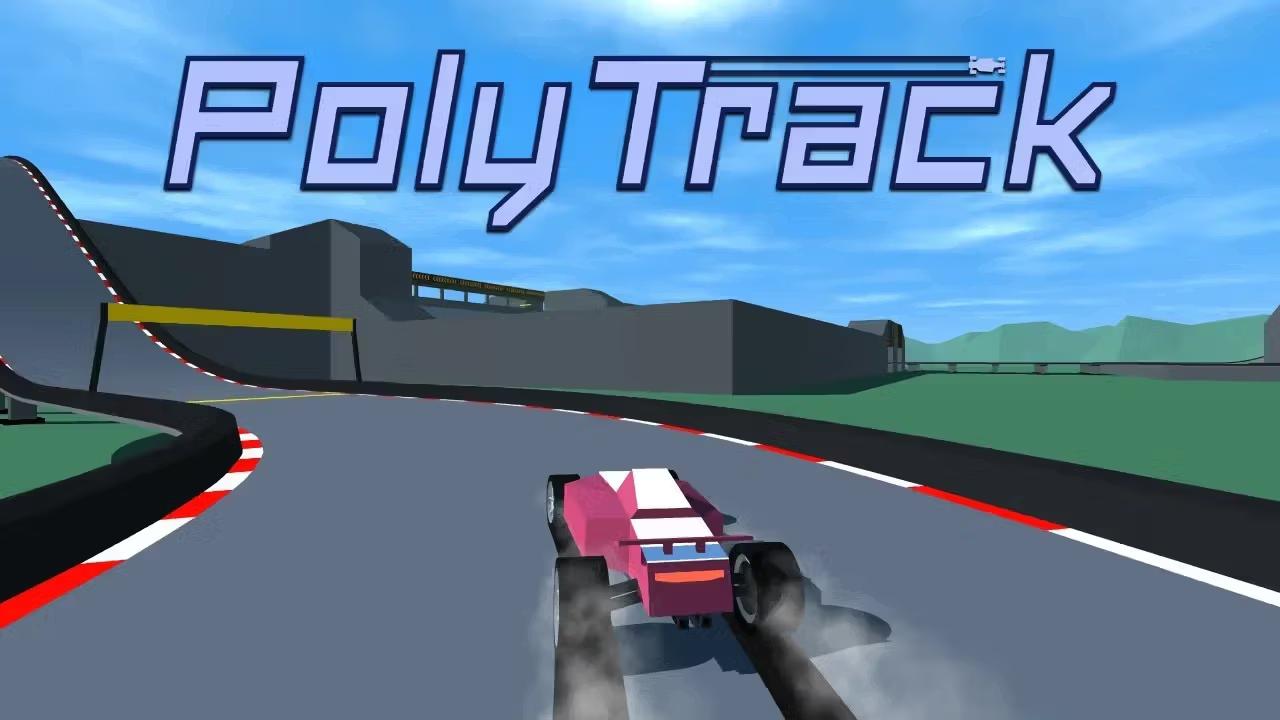
PolyTrack is a fast-paced online website game that blends arcade-style racing with precision time-trials and competitive multiplayer. Because it runs right in the browser, we can jump into a race in seconds, no huge downloads, no complicated setup, just pure speed and skill.
In this guide, we'll walk through exactly how PolyTrack works, which modes are worth your time, and the strategies that actually help us win more races and climb leaderboards. Whether we're trying to shave milliseconds off a time trial or fighting for first place in a crowded lobby, understanding the game's mechanics and progression makes a massive difference.
What Is PolyTrack And How Does It Work?
PolyTrack is a browser-based online racing game focused on tight controls, fast laps, and highly replayable tracks. Instead of long races with rubber-banding AI, we get compact courses and short runs where every corner, drift, and boost matters.
Core Gameplay Loop
The core loop in PolyTrack is simple but addicting:
- Pick a track and vehicle.
We start with a small selection, but more open up as we level, complete challenges, and hit certain milestones.
2. Race for time or position.
Depending on the mode, we either chase our personal best, a ghost, or real opponents.
3. Analyze the run.
We see lap times, splits, and often where we lost speed, especially if we compare against a ghost or leaderboard times.
4. Adjust and retry.
Change our line, brake earlier, drift longer, or choose a different vehicle setup.
That "just one more run" feeling is what keeps us coming back. PolyTrack rewards tiny improvements. Cutting a corner properly or nailing a drift through a sequence of turns can drop half a second, which is huge in this game.
Under the hood, PolyTrack usually runs server-side matchmaking and time validation to keep races fair. Because it's an online website game, most of the heavy lifting is optimized for browsers, so we don't need a high-end PC to enjoy smooth gameplay.
Supported Platforms And System Requirements
Since PolyTrack runs in the browser, it's surprisingly accessible. In general, we can play on:
- Desktop browsers: Chrome, Firefox, Edge, Safari (latest versions recommended)
- Laptops and Chromebooks: As long as we have a modern browser and a stable connection
- Some tablets: Performance will depend on browser support and hardware
Basic requirements typically include:
- A recent browser with WebGL/WebGPU enabled
- A stable internet connection for syncing races and leaderboards
- A keyboard or compatible controller (gamepads tend to feel better for many players)
If we notice stuttering or input lag, switching to a different browser, closing background tabs, or lowering visual settings (if available in-game) often helps. Playing wired instead of Wi‑Fi can also reduce latency in competitive lobbies.
Game Modes And Play Options
PolyTrack offers multiple modes that keep the racing loop fresh, whether we're learning the basics or grinding for a top 10 time.
Solo Time Trials And Practice Runs
Time trials are the purest form of PolyTrack:
- No collisions, no chaos, just us versus the track and the clock.
- We can race against our own ghost, a best-lap ghost, or sometimes a "recommended" ghost based on the leaderboard.
- Practice runs let us restart quickly, letting us drill specific corners or sections.
We should use this mode to:
- Learn braking points and ideal racing lines
- Experiment with different vehicles or setups
- Warm up before jumping into ranked or competitive lobbies
Time trials are also the easiest way to feel real improvement. When we cut our personal best by 0.3 seconds, we know we're actually getting better.
Multiplayer Races And Competitive Lobbies
Multiplayer is where PolyTrack turns from a precision time game into a full-on adrenaline rush.
In competitive lobbies:
- We race live against other players, often with collision, drafting, and conflict over ideal racing lines.
- Starting position and launch timing matter, especially on tight tracks.
- Mistakes are costlier: a single spin-out can drop us from first to last.
Some lobbies are ranked or "competitive," meaning our results influence matchmaking or visible rank. Others are casual, perfect when we're still learning or testing new strategies.
To get the most out of multiplayer, we should:
- Join lobbies close to our ping/region to reduce lag
- Watch how faster players take corners or use boosts
- Accept that early on, we'll lose a lot, and treat those races as free coaching
Custom Rooms And Community Events
Custom rooms let us fine-tune the experience:
- Invite-only lobbies with friends or club members
- Control over track rotation, laps, and rules
- Ideal for small tournaments, practice blocks, or themed events
Community events often include:
- Weekly or monthly time-attack contests
- Creator spotlights for fan-made tracks
- Seasonal events with unique rewards or cosmetics
We recommend following the game's official Discord, forums, or social channels, since that's usually where PolyTrack's community announces custom cups, leagues, and special races.
Understanding PolyTrack’s Controls And Mechanics
To actually win in PolyTrack, we have to go beyond "gas and hope." The game's controls and physics are simple to learn but punishing if we're sloppy.
Basic Movement, Drifting, And Braking
Most default control schemes work like this:
- Accelerate: W / Up arrow / right trigger
- Brake / Reverse: S / Down arrow / left trigger
- Steering: A / D or analog stick left/right
- Handbrake / Drift: A dedicated key or button
Key fundamentals:
- Feather the throttle. Staying at full acceleration in every corner usually leads to understeer and crashes.
- Brake before, not in, the corner. We want the car stable as we turn: hard braking while turning can cause spins or missed apexes.
- Use drifting intentionally. In PolyTrack, drifting is often faster on tight or medium corners but slower on very long, gentle ones. We should test both styles and see where we gain time.
Boosts, Power-Ups, And Track Hazards
Many PolyTrack tracks include items and hazards to keep races dynamic:
- Boost pads: Grant a burst of speed. We want to hit them straight and prepared, so we don't slam into the next barrier.
- Collectible boosts or nitro meters: We might fill a gauge over time or by clean driving, then trigger a manual boost down straights.
- Power-ups: Depending on the track or mode, we may see shields, slows, or other effects that impact opponents.
- Hazards: Oil slicks, jump gaps, spinning obstacles, or moving barriers.
General rules:
- Never boost into a sharp corner we're not ready for.
- If there's a hazard, there's usually a safe line, we should watch replays or ghosts to find it.
- Learn where boosts appear and plan our racing line to collect them without losing momentum.
Track Layouts, Surface Types, And Shortcuts
PolyTrack's tracks aren't just visual reskins. Layouts and surfaces change how we should drive.
- Tight technical tracks reward precise braking and short, controlled drifts.
- High-speed tracks need smooth steering and minimal corrections.
- Mixed layouts combine long straights with tricky chicanes or hairpins.
Surface types (when present) can include:
- Asphalt: Balanced grip and predictable handling.
- Dirt or gravel: More sliding: drifting becomes more important.
- Ice or low-grip surfaces: Very gentle inputs: oversteering is punished.
Shortcuts are where we can gain the most time:
- Look for alt routes, jump lines, or narrow side paths that cut distance.
- Many shortcuts are risk–reward: faster if nailed, devastating if we miss the landing.
- Use practice mode to test shortcuts without worrying about losing a race.
Progression, Rewards, And Customization
PolyTrack uses a progression system that keeps us chasing new goals beyond just winning races.
Unlocking Tracks, Vehicles, And Cosmetics
As we race, we typically earn XP and in-game currency that unlock:
- New tracks: Opening up harder layouts and fresh scenery
- Vehicles or vehicle variants: Each with different stats such as acceleration, top speed, handling, or drift behavior
- Cosmetics: Paint jobs, decals, wheels, trails, avatars, or banners
We don't need to spend money to progress, but some online racing games (PolyTrack included, depending on the version or platform) may offer optional passes or bundles that speed up unlocks or add unique cosmetics. For performance, though, the key is learning the vehicles we already own.
Currencies, Challenges, And Daily Goals
Most modern online website games lean on multi-layered progression, and PolyTrack is no exception. We'll usually see:
- Base currency: Earned from races, used for standard unlocks
- Premium currency (if present): Often tied to optional purchases or special cosmetics
- Daily / weekly challenges: Such as "Finish 5 races," "Drift for 20 seconds," or "Set a top 1,000 time on any track."
We should log in with a plan:
- Knock out daily goals first for efficient progress
- Use challenges to push us into modes or tracks we might normally ignore
- Avoid hoarding currency forever, spend it on vehicles that fit our preferred style
Building And Sharing Custom Tracks
One of PolyTrack's big draws is user-generated content. If there's a track editor available where we play, it's worth exploring.
With the track builder we can:
- Place corners, straights, jumps, and hazards
- Adjust elevation and surface types
- Test instantly, then tweak problem areas
Sharing is often done via:
- In-game browsers or codes
- Community hubs like Discord or forums
Strong custom tracks tend to be:
- Readable: Players can see where to go and react in time
- Challenging but fair: Punish big mistakes, not tiny input errors
- Replayable: Multiple viable lines, interesting shortcuts, and skill ceilings
Creating tracks also makes us better racers. We start to see how layouts influence speed and where designers hide time saves.
Winning Strategies And Tips For New Players
We don't need supernatural reflexes to get good at PolyTrack. What we do need is a structured approach to learning.
Racing Lines, Cornering, And Momentum Management
Our number one priority is maintaining momentum:
- Look ahead, not at the nose of the car. This helps us plan braking and steering.
- Outside–inside–outside: Start on the outside of the corner, clip the inside (apex), and drift back out. This straightens the corner and lets us carry more speed.
- Slow in, fast out: Enter a bit slower than feels natural, then accelerate early. We'll exit faster and hit boosts or straights at higher speed.
In PolyTrack's short races, one perfect corner can matter more than three decent ones. We should identify the single most important corner, the one before a long straight, and master it first.
Camera Settings, Sensitivity, And HUD Tweaks
A few simple settings often provide free speed:
- Camera distance: Many of us prefer a slightly pulled-back view to see more of the track ahead.
- Field of view (FOV): A moderate FOV balance helps with both speed sensation and clarity.
- Steering sensitivity: If our car feels twitchy, lower sensitivity. If it feels sluggish, raise it slightly.
- HUD clutter: Hide or shrink elements we don't need mid-race so we can focus on the track.
It's worth spending 10–15 minutes doing time trials while slowly adjusting these settings until everything feels natural. Once we find a setup that works, we should stick with it long enough for muscle memory to form.
Common Mistakes To Avoid
New PolyTrack players often fall into the same traps:
- Overdriving corners: Entering too fast, sliding wide, and losing all exit speed.
- Spamming boosts: Firing boosts in random places instead of saving them for straights or post-corner acceleration.
- Ignoring ghosts and replays: We have free access to how faster players drive: not using that information slows our improvement.
- Tilting after a bad race: Frustration leads to worse decision-making. When we feel tilted, switching back to solo time trials or taking a short break can reset our mindset.
If we treat each mistake as data instead of failure, we'll climb much faster than players who just queue up and hope for the best.
Community, Leaderboards, And Competitive Play
PolyTrack's community and ranking systems are where long-term motivation really kicks in. Racing alone is fun: racing with (and against) a community is what keeps us invested.
Joining Clubs, Tournaments, And Events
Most active PolyTrack scenes revolve around:
- Clubs / teams: Groups of players who practice together, share track knowledge, and set internal goals.
- Community tournaments: Bracketed events, league nights, or seasonal cups.
- Special events: Limited-time modes, theme nights (e.g., "no boosts" or "only custom tracks"), or charity races.
Joining a club or Discord:
- Gives us teammates to queue with
- Provides feedback on our replays and lines
- Exposes us to strategies we might never figure out alone
Climbing Leaderboards And Improving Consistency
Leaderboards are the public scoreboard of PolyTrack. Climbing them is about consistency as much as peak performance.
We can improve our rank by:
- Focusing on a small set of tracks and mastering them instead of playing everything casually
- Setting incremental goals: top 50%, then top 25%, then top 10% on a favorite track
- Recording or reviewing our runs to spot bad habits
Most top players don't drive absolutely perfect laps: they drive very good laps very consistently. When we can chain three clean laps in a row, we're already ahead of most of the player base.
Staying Safe And Respectful Online
Because PolyTrack is an online website game, basic digital safety and etiquette matter:
- Avoid sharing personal information in public chats.
- Use in-game reporting or blocking tools if we encounter harassment.
- Respect other players in lobbies, no deliberate ramming, griefing, or spamming.
A respectful community keeps the game healthy, which benefits all of us. We can be competitive without being toxic.
Conclusion
PolyTrack proves that an online website game doesn't need massive downloads or complex simulators to deliver deep, satisfying racing. With tight controls, fast tracks, and a thriving focus on time trials and competitive play, it offers a skill ceiling high enough to keep us grinding for months.
If we're just starting out, we should:
- Spend real time in solo time trials learning lines and braking points
- Tweak our controls and camera until the car feels like an extension of our hands
- Use ghosts, replays, and leaderboards as free coaching
From there, joining community events, building or testing custom tracks, and slowly climbing leaderboards is where PolyTrack really shines. We don't have to be the fastest player in the world to enjoy it, but with the right mindset and habits, we might surprise ourselves with how far up the rankings we can go.
PolyTrack Online Website Game FAQ
What is PolyTrack and how does this online website game work?
PolyTrack is a browser-based online website game that focuses on short, high-speed races and precise time-trials. You pick a track and vehicle, race for either best time or position, review your laps and splits, then adjust your lines, braking, and drifting to slowly climb leaderboards and improve consistency.
What are the main game modes in PolyTrack?
PolyTrack offers solo time trials, multiplayer races, and custom rooms or community events. Time trials focus on beating your own or ghost lap times. Multiplayer lobbies add collisions, drafting, and ranking. Custom rooms and events let friends or communities run tournaments, themed cups, and time-attack challenges on curated or custom tracks.
What devices and system requirements do I need to play PolyTrack online?
Because PolyTrack is an online website game that runs in your browser, it works on most modern desktop browsers, laptops, Chromebooks, and some tablets. You’ll need a WebGL/WebGPU-capable browser, stable internet, and a keyboard or controller. Closing background tabs or switching browsers can help if you notice lag or stuttering.
How can I get better and win more races in PolyTrack?
Focus on clean racing lines, braking before corners, and maintaining momentum. Use time trials to practice key turns and test different vehicles. Watch ghosts or replays from faster players, tweak camera and sensitivity settings until they feel natural, and avoid tilting after bad races so you stay consistent over longer sessions.
Is PolyTrack free to play, and does it have pay-to-win elements?
PolyTrack is typically free to play in the browser, with progression tied to racing, XP, and in-game currency. Some versions may offer optional premium currency, passes, or cosmetic bundles. These usually speed up cosmetic unlocks or add visual items rather than raw performance upgrades, keeping competition mostly skill-based rather than pay-to-win.